Showing posts with label News. Show all posts
Showing posts with label News. Show all posts
Sunday, November 25, 2012
Vietnamese Ethnic Culture Village Calls for investment
PARIS, Dec 12 (Bernama) -- A project to build the culture-tourism village of Vietnamese ethnic groups was introduced to investors and friends at a talk held here on Saturday, Vietnam News Agency (VNA) reported.

Hoi An: Walking in the footsteps of history
Hoi An has been trading with the outside world since almost the 15th century. Once one of the busiest ports in all of South East Asia, the docksides of this relatively small central Vietnamese town were once awash with the sound of Chinese, Japanese, American, European and Indonesian traders, all bringing their wares to Vietnam’s doorstep. Warehouses strained under the weight of the orient’s finest silks and spices. Everything, from elephant tusks to beeswax, from paper to porcelain, was brought here and from here to the world.
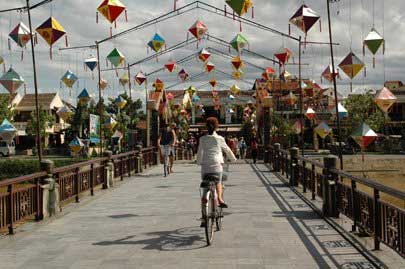
Cycling over Cam Nam Bridge.
Hoi An still maintains a brisk trade with all its old business partners. However, it’s now Hoi An’s cash tills rather than its docks that ring to the sound of international commerce. Hoi An, with its traditional housing and narrow streets, all unspoilt by the passage of time, is a tourist mecca. Apart from the faces, little has changed in Hoi An since its commercial hey day. The nations of the globe still flock here, now to wander its ancient streets and marvel at a piece of Vietnam’s living history.Hoi An’s close relation to the rest of the world has worked to define the very bones of the town. Chinese and Japanese traders, particularly, extended their long stays in port to establish permanent agencies here from which to manage their trade. From these beginnings, sprang the first permanent Chinese settlement in Southern Vietnam, whose congregational assembly halls still draw both the descendants of those early Chinese traders and tourists alike. 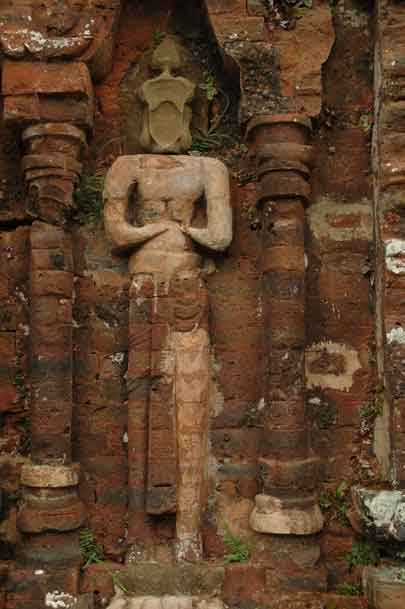 Cham ruins at My Son. - Photos: Simon Speakman Cordall Within its narrow walls, around halfway across, stands the temple of the northern God Tran Vo Bac De, critically for sailors, the God of weather. One legend about the bridge is that it as built to subdue the enormous ‘mamazu’ dragon monster, whose global reach stretched from its head in India to its tail in Japan, the movement of which was supposed to cause earthquakes. Vietnam, and principally Hoi An, was thought to sit across its back, so building the bridge at this spot would pin the Mamazu down and protect those the traders and settlers had left behind. However, Hoi An, and its surrounds, date back further than the international trade which later came to define the town. Around 55km outside of Hoi An’s centre can be found the ruins of My Son, once the political and religious centre of the Champa Kingdom. The Cham, who still exist within Vietnam today, once ruled the central provinces of modern Vietnam before being absorbed by the Vietnamese in around the 17th Century. My Son, the most significant and extensive Champa sites in Vietnam, dates back to the 4th -10th Century and its Indian influenced ruins are an easy motorbike ride away. Though it may seem suffocated by the sheer number of tourists who make their way here, Hoi An’ beauty - unspoilt by either time or war - still offers visitors a unique glimpse into Vietnam’s historic past. To walk Hoi An’s historic streets is to walk in the footsteps of those traders and merchants who built so much of this town and, in their own way, helped to shape the Vietnam of today. |
Thursday, November 22, 2012
Russian tourists lured in Southcentral region
The number of flights from Russia’s Far East region to Cam Ranh international airport in the southcentral region will increase from 7-9 to 21 per week as from October 25.
The decision was made at a meeting between the Khanh Hoa provincial People’s Committee and local departments on October 11 to serve the tours co-organized by Vietnam’s Anh Duong Production, Service and Import-Export Company and Russia’s Pegas Turistik Company.
These tours have been in operation since late October, 2011, through which as many as 60,000 Russian have come to visit Vietnam. 60-70 percent of them have preferred staying first in Nha Trang than in Binh Thuan, Ninh Thuan, Phu Yen and Quang Nam.
Hoang Thi Phong Thu, CEO of Anh Duong Production, Service and Import-Export Company, said almost all tourists were pleased to enjoy good accommodation, beautiful scenery and delicious food and often stayed for 7 to 10 days in 3-5 star hotels.
Since early this year, Khanh Hoa has received 383,000 foreign tourists, including 50,000 Russian, up 27 percent compared to the same period last year.
The province is expected to welcome 550,000 foreign tourists by late 2012.
Wednesday, November 21, 2012
The National Circus Gala
The National Circus Gala this week will be the last time the Ho Chi Minh City Circus performs at the September 23rd Park, its home for more than a decade. Nomadic life continues after 12 years in a downtown park.
The Ho Chi Minh City Circus at September 23rd Park. The park will soon become a bus station and the circus will have to relocate.
The park will soon become a bus station and the circus will have to relocate, and it is not the first time it has been asked to do so.
Nearly 70 artists will take part in the October 19-21 gala, a precursor to the International Circus Festival to be held in Hanoi next month.
It will feature some famous circus artists from Hanoi, Quang Tri and Hue, and the Vietnam Circus Association will nominate the top four performances to represent the country at the Hanoi festival.
But the gala is not the HCMC artists’ main concern right now since they have been asked to move out of September 23rd Park by the month’s end.
Phi Vu, 49, a versatile performer (a trapeze artist, a clown and other roles), told Vietweek that since its establishment in 1986, his troupe has been moved around several times.
“We have been living a nomadic life for many years, moving from a theater and swimming pool in District 5, then District 11, and recently, this [September 23rd] park. However, it looks as though this is not the final venue.”
The park in District 1 is not an ideal place for a circus, but its 3,000-square-meter area is the best and largest venue the HCMC Circus has had so far.
It gives them enough space for a full-fledged tent, a practice area, and room to care for a variety of animals including elephants, dogs, monkeys, horses, and a python.
Vu, who became the troupe’s first Meritorious Artist (a title granted by the government) in 1997 and has been a circus performer for 35 years, said it is not the first time that his troupe has been asked to move out of the park.
“In 2007 we were told we might have to go a different venue, the HCMC Zoo.
A performance by the HCMC Circus. The troupe will compete in the National Circus Gala October 19 to 21 in Ho Chi Minh City.
“[That] really puzzled us since it was too small for the substructures and equipment.
“Moreover, we were told to merge with other stage arts like puppetry to create something like a union of stage arts from the south. It would be messy to mix arts that do not match.”
Pham Van Xuyen, deputy director of the Vietnam Circus Association, told Phap Luat newspaper in an interview: “Technically, circus and puppetry cannot coexist under one roof due to their differences, and a strained merger never works.”
Ho Van Thanh, head of the HCMC Circus, told Vietweek that the first difficulty is fitting the tent in the zoo, where the allotted area is only 600 square meters.
“The next problem is the lack of space to keep tame animals amidst the wild ones. Moreover, the HCMC Wild Animal Protection Association does not allow us to care for our animals in the zoo, so we have to hire a private site for them. This will affect the training a lot.”
“Last but not least it takes a lot of money to upgrade to a soundproof tent in order not to disturb the high school next to the zoo. It will take a long time and money for us to do this and other things to set up in a different, much smaller place.”
Back in 2007, these arguments prompted authorities to allow the circus to stay on at their favorite place for five more years, although its infrastructure, including the tent and seating, animal enclosures and safety arrangements have deteriorated. The circus company has not had the money to maintain or upgrade its facilities.
Vu said the troupe has been asked to move out at the end of this month to make way for a bus terminal.
“But so far, concerned authorities have not offered any support.
“If we move to Gia Dinh Park in Go Vap District, around 10 kilometers from September 23rd park, as they want us to, our troupe will struggle even more. Audiences will not come from downtown areas to watch our show.”
Furthermore, Thanh said, the Go Vap Park would be just another temporary venue for his troupe.
“According to the government’s decision, our final destination will be an amphitheater in District 11. However, this is just a sketch that has remained on paper for years.”
Despite all the troubles the company has faced, including the lack of money and a permanent venue, it has tried to attract more viewers. The younger members of the circus, in particular, have been able to find name and fame for themselves in the international arena.
The company’s artists have won both national and international prizes, including a silver medal at the 1997 International Circus Festival in Hanoi and a bronze medal in North Korea in 2000.
It has also entertained audiences in many cities in France, Belgium, Taiwan and elsewhere.
Vu is also director of the upcoming National Circus Gala.
“Thanks to the money we have collected through extra shows and canvassing funds from enterprises and individuals, we are able to put up some good shows, not only for children but also adults, like the circus-drama ‘Romeo and Juliet,’ and this coming event.”
The circus has lost is popularity in Vietnam over the last two decades for various reasons. Both children and adults have favored other forms of entertainment (video games, reality shows etc.) Lacking funds to invest in training and offering better remuneration to the artists, circuses have laid themselves open to the charge of putting on monotonous shows and not being innovative.
In this situation, winning back the audience is not easy, Vu said.
“But this is the target of any art. We will never give up.”
Sunday, November 18, 2012
Unique Tourism Opportunities in Mekong Delta
In context of the current economic woes in the world, the tourism sector is still striving to attract more people to visit the Mekong Delta area in Vietnam, which is offering unique, stress free and exotic tours.
The Ministry of Culture, Sports and Tourism has approved a plan to develop tourism as a key economic sector in the Mekong Delta. The plan, which extends till 2020, will aid the country's economic transformation and help reduce hunger and poverty, according to the ministry. Thanks to its cultural diversity and the range of tourism it offers, such as eco, community-based, sea and islands, and diverse culture, the Mekong Delta attracts millions of visitors each year. According to the Mekong Delta Tourism Association, around 12.8 million holidaymakers have visited the region since the beginning of the year, a year-on-year increase of 6 percent and a turnover of more than VND2.6 trillion ($125 million), an increase of 25 percent compared to last year. In provinces like An Giang, in October alone, the province has welcomed around 28,000 tourists, an increase of 2.6 percent compared to September. Among them were around 2,300 international travelers, an increase of 6.7 percent compared to September. October turnover alone was VND17 billion ($815,662), an increase of 3.9 percent compared to last month. There was a hike in holidaymakers from North Vietnam to the Mekong Delta and Cambodia, said Nguyen Dai Ho, director of the Phuong Nam Travel Company in Kien Giang. Accordingly, the company in coordination with the Hon Gai Tourism Company launched a new route Hanoi - Ho Chi Minh - Tay Ninh - Ha Tien - Phu Quoc -Hanoi. Kim Trang from the Hanoi Tourism Company shared that every month her company organizes a tour for six groups of 30 tourists who want to go to the Mekong delta city of Can Tho to listen to amateur music on a boat along the river, visit orchards in the Mekong delta province of Tien Giang, and the Mac Cuu mausoleum in the town of Ha Tien, in the Mekong Delta province of Kien Giang. Tommy, a representative of Fantasy Tour Company, said Vietnam has the magnificent Mekong River which foreigners love as it flows through six countries. His customers are interested in culture of the region, the natives and the natural beauty, rather than luxury hotels and sea bathing. Foreign tourists have a good eye for the Mekong River and 40 percent of tourists here are Japanese, said Nguyen Duc Tho, a tourist guide of HCMC-based Le Phong Travel Company.
Le Van Hien, chairman of Cuu Long Tourism Company, said the Mekong Delta Tourism Association and local tourism associations should train more tourist guides, waiters, and restore traditional festivals of ethnic minority groups like Khmer, Chinese, and Cham. More important was how to link the uniqueness of each province and build an alluring image of the whole region and offering specific tourism packages . There is also need to attract more investments and improve the basic infrastructure and accommodation since the region has the lowest rates of five-star hotels and resorts in Vietnam, said Hai Dang, Director of Vietravel Tourism Company. |


Monday, October 22, 2012
Opening Last king’s palace for tourist
Khai Tuong Lau (An Dinh palace) where the last king Bao Dai of Vietnam and his family lived from 1945 to 1955 has opened for tourists.
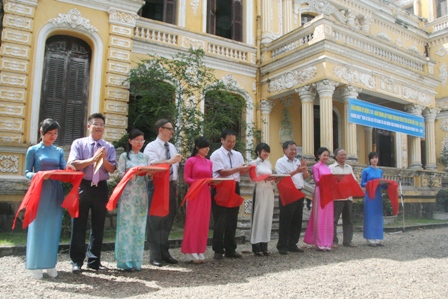
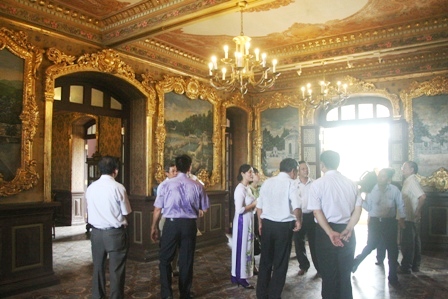
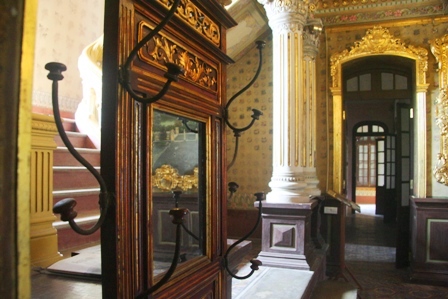
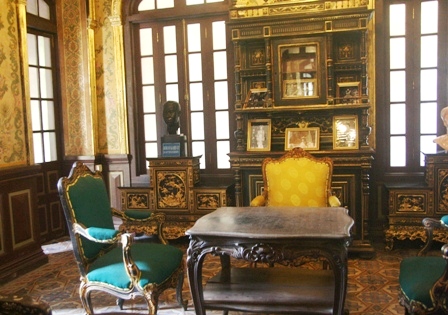
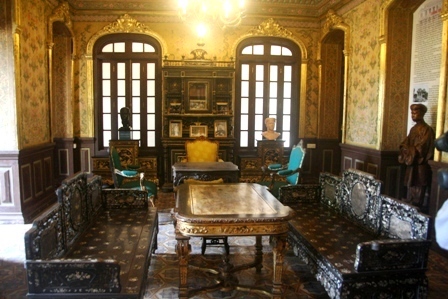
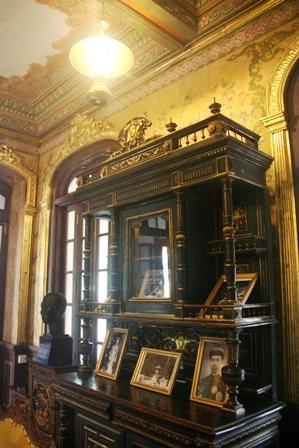
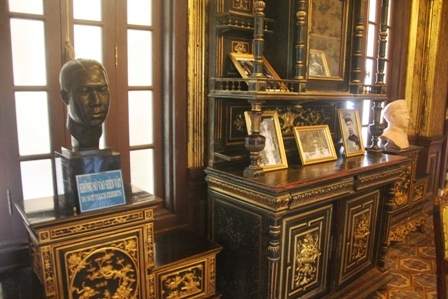
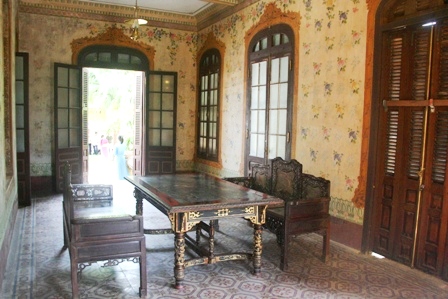
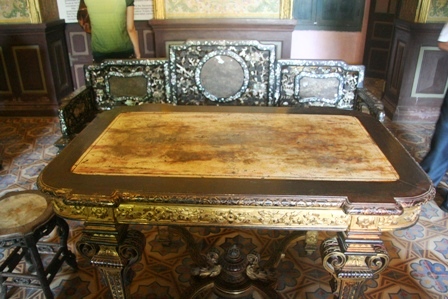
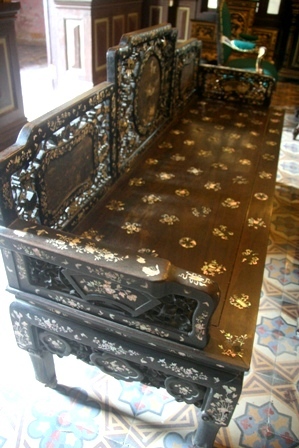
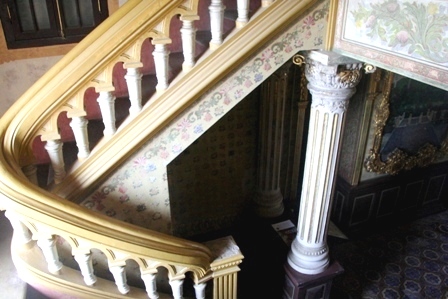
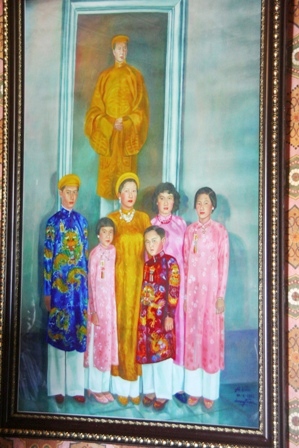
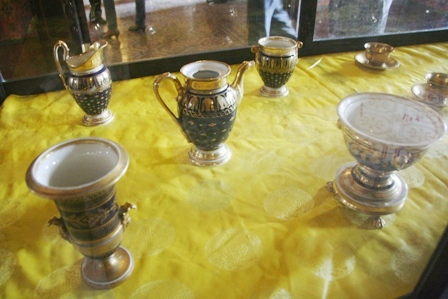
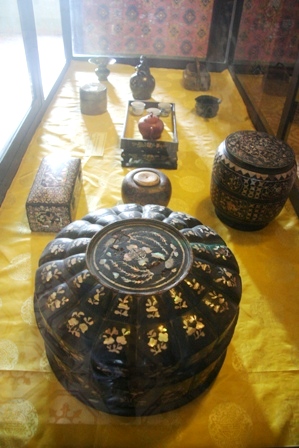
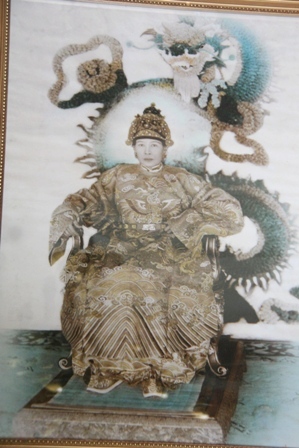
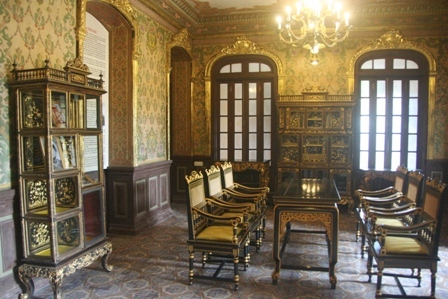
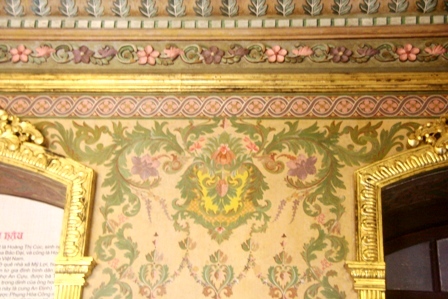
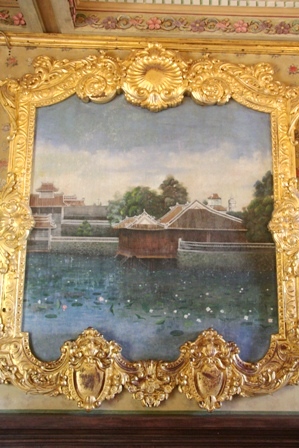
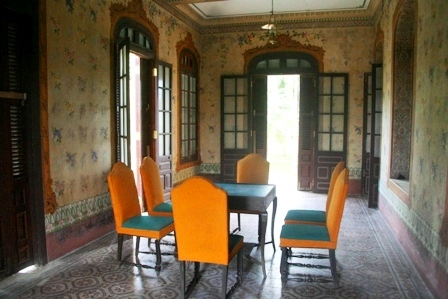
The palace was built by King Khai Dinh, before he enthroned. Khai Dinh’s son, Bao Dai, lived here from 1922, and 17 years laters, it became the assets of Bao Dai’s eldest son, Bao Long.
Before 1945, this Palace was managed by the Nguyen Dynasty. After August 1945, it became the home of King Bao Dai’s mother and Bao Dai’s family. Then in 1954, Ngo Dinh Diem administration confiscated the palace. Bao Dai’s mother bought the house at No.79 Phan Dinh Phung to stay until she died.
After 1975, the revolutionary administration took over and gave the palace back to Bao Dai’s mother but she donated the palace to the government. An Dinh Palace was then managed by the Hue Labor Cultural House before it was handed over to the Center for Preservation of Hue Relics in early 2012.
The palace was restored between 2007 and 2008. The Center for Preservation of Hue Relics and German experts restored the 2,000m2 mural in the palace.
There are some photos of the palaces.
The National Circus Gala
The National Circus Gala this week will be the last time the Ho Chi Minh City Circus performs at the September 23rd Park, its home for more than a decade. Nomadic life continues after 12 years in a downtown park.
The Ho Chi Minh City Circus at September 23rd Park. The park will soon become a bus station and the circus will have to relocate.
The park will soon become a bus station and the circus will have to relocate, and it is not the first time it has been asked to do so.
Nearly 70 artists will take part in the October 19-21 gala, a precursor to the International Circus Festival to be held in Hanoi next month.
It will feature some famous circus artists from Hanoi, Quang Tri and Hue, and the Vietnam Circus Association will nominate the top four performances to represent the country at the Hanoi festival.
But the gala is not the HCMC artists’ main concern right now since they have been asked to move out of September 23rd Park by the month’s end.
Phi Vu, 49, a versatile performer (a trapeze artist, a clown and other roles), told Vietweek that since its establishment in 1986, his troupe has been moved around several times.
“We have been living a nomadic life for many years, moving from a theater and swimming pool in District 5, then District 11, and recently, this [September 23rd] park. However, it looks as though this is not the final venue.”
The park in District 1 is not an ideal place for a circus, but its 3,000-square-meter area is the best and largest venue the HCMC Circus has had so far.
It gives them enough space for a full-fledged tent, a practice area, and room to care for a variety of animals including elephants, dogs, monkeys, horses, and a python.
Vu, who became the troupe’s first Meritorious Artist (a title granted by the government) in 1997 and has been a circus performer for 35 years, said it is not the first time that his troupe has been asked to move out of the park.
“In 2007 we were told we might have to go a different venue, the HCMC Zoo.
A performance by the HCMC Circus. The troupe will compete in the National Circus Gala October 19 to 21 in Ho Chi Minh City.
“[That] really puzzled us since it was too small for the substructures and equipment.
“Moreover, we were told to merge with other stage arts like puppetry to create something like a union of stage arts from the south. It would be messy to mix arts that do not match.”
Pham Van Xuyen, deputy director of the Vietnam Circus Association, told Phap Luat newspaper in an interview: “Technically, circus and puppetry cannot coexist under one roof due to their differences, and a strained merger never works.”
Ho Van Thanh, head of the HCMC Circus, told Vietweek that the first difficulty is fitting the tent in the zoo, where the allotted area is only 600 square meters.
“The next problem is the lack of space to keep tame animals amidst the wild ones. Moreover, the HCMC Wild Animal Protection Association does not allow us to care for our animals in the zoo, so we have to hire a private site for them. This will affect the training a lot.”
“Last but not least it takes a lot of money to upgrade to a soundproof tent in order not to disturb the high school next to the zoo. It will take a long time and money for us to do this and other things to set up in a different, much smaller place.”
Back in 2007, these arguments prompted authorities to allow the circus to stay on at their favorite place for five more years, although its infrastructure, including the tent and seating, animal enclosures and safety arrangements have deteriorated. The circus company has not had the money to maintain or upgrade its facilities.
Vu said the troupe has been asked to move out at the end of this month to make way for a bus terminal.
“But so far, concerned authorities have not offered any support.
“If we move to Gia Dinh Park in Go Vap District, around 10 kilometers from September 23rd park, as they want us to, our troupe will struggle even more. Audiences will not come from downtown areas to watch our show.”
Furthermore, Thanh said, the Go Vap Park would be just another temporary venue for his troupe.
The park will soon become a bus station and the circus will have to relocate, and it is not the first time it has been asked to do so.
Nearly 70 artists will take part in the October 19-21 gala, a precursor to the International Circus Festival to be held in Hanoi next month.
It will feature some famous circus artists from Hanoi, Quang Tri and Hue, and the Vietnam Circus Association will nominate the top four performances to represent the country at the Hanoi festival.
But the gala is not the HCMC artists’ main concern right now since they have been asked to move out of September 23rd Park by the month’s end.
Phi Vu, 49, a versatile performer (a trapeze artist, a clown and other roles), told Vietweek that since its establishment in 1986, his troupe has been moved around several times.
“We have been living a nomadic life for many years, moving from a theater and swimming pool in District 5, then District 11, and recently, this [September 23rd] park. However, it looks as though this is not the final venue.”
The park in District 1 is not an ideal place for a circus, but its 3,000-square-meter area is the best and largest venue the HCMC Circus has had so far.
It gives them enough space for a full-fledged tent, a practice area, and room to care for a variety of animals including elephants, dogs, monkeys, horses, and a python.
Vu, who became the troupe’s first Meritorious Artist (a title granted by the government) in 1997 and has been a circus performer for 35 years, said it is not the first time that his troupe has been asked to move out of the park.
“In 2007 we were told we might have to go a different venue, the HCMC Zoo.
A performance by the HCMC Circus. The troupe will compete in the National Circus Gala October 19 to 21 in Ho Chi Minh City.
“[That] really puzzled us since it was too small for the substructures and equipment.
“Moreover, we were told to merge with other stage arts like puppetry to create something like a union of stage arts from the south. It would be messy to mix arts that do not match.”
Pham Van Xuyen, deputy director of the Vietnam Circus Association, told Phap Luat newspaper in an interview: “Technically, circus and puppetry cannot coexist under one roof due to their differences, and a strained merger never works.”
Ho Van Thanh, head of the HCMC Circus, told Vietweek that the first difficulty is fitting the tent in the zoo, where the allotted area is only 600 square meters.
“The next problem is the lack of space to keep tame animals amidst the wild ones. Moreover, the HCMC Wild Animal Protection Association does not allow us to care for our animals in the zoo, so we have to hire a private site for them. This will affect the training a lot.”
“Last but not least it takes a lot of money to upgrade to a soundproof tent in order not to disturb the high school next to the zoo. It will take a long time and money for us to do this and other things to set up in a different, much smaller place.”
Back in 2007, these arguments prompted authorities to allow the circus to stay on at their favorite place for five more years, although its infrastructure, including the tent and seating, animal enclosures and safety arrangements have deteriorated. The circus company has not had the money to maintain or upgrade its facilities.
Vu said the troupe has been asked to move out at the end of this month to make way for a bus terminal.
“But so far, concerned authorities have not offered any support.
“If we move to Gia Dinh Park in Go Vap District, around 10 kilometers from September 23rd park, as they want us to, our troupe will struggle even more. Audiences will not come from downtown areas to watch our show.”
Furthermore, Thanh said, the Go Vap Park would be just another temporary venue for his troupe.
“According to the government’s decision, our final destination will be an amphitheater in District 11. However, this is just a sketch that has remained on paper for years.”
Despite all the troubles the company has faced, including the lack of money and a permanent venue, it has tried to attract more viewers. The younger members of the circus, in particular, have been able to find name and fame for themselves in the international arena.
The company’s artists have won both national and international prizes, including a silver medal at the 1997 International Circus Festival in Hanoi and a bronze medal in North Korea in 2000.
It has also entertained audiences in many cities in France, Belgium, Taiwan and elsewhere.
Vu is also director of the upcoming National Circus Gala.
“Thanks to the money we have collected through extra shows and canvassing funds from enterprises and individuals, we are able to put up some good shows, not only for children but also adults, like the circus-drama ‘Romeo and Juliet,’ and this coming event.”
The circus has lost is popularity in Vietnam over the last two decades for various reasons. Both children and adults have favored other forms of entertainment (video games, reality shows etc.) Lacking funds to invest in training and offering better remuneration to the artists, circuses have laid themselves open to the charge of putting on monotonous shows and not being innovative.
In this situation, winning back the audience is not easy, Vu said.
“But this is the target of any art. We will never give up.”
Despite all the troubles the company has faced, including the lack of money and a permanent venue, it has tried to attract more viewers. The younger members of the circus, in particular, have been able to find name and fame for themselves in the international arena.
The company’s artists have won both national and international prizes, including a silver medal at the 1997 International Circus Festival in Hanoi and a bronze medal in North Korea in 2000.
It has also entertained audiences in many cities in France, Belgium, Taiwan and elsewhere.
Vu is also director of the upcoming National Circus Gala.
“Thanks to the money we have collected through extra shows and canvassing funds from enterprises and individuals, we are able to put up some good shows, not only for children but also adults, like the circus-drama ‘Romeo and Juliet,’ and this coming event.”
The circus has lost is popularity in Vietnam over the last two decades for various reasons. Both children and adults have favored other forms of entertainment (video games, reality shows etc.) Lacking funds to invest in training and offering better remuneration to the artists, circuses have laid themselves open to the charge of putting on monotonous shows and not being innovative.
In this situation, winning back the audience is not easy, Vu said.
“But this is the target of any art. We will never give up.”
Six ideal places for honeymoon in Vietnam
If you're planning a honeymoon or just want a romantic getaway in an exotic location. Most people who honeymoon in Vietnam still choose to head to the beaches, and romantic places and there are certainly some amazing ones here.


You're looking for something a little more adventurous or different, there are plenty of other places in Vietnam what are wonderfully romantic and also off the beaten path. Here are six of the highlights of the romantic places Vietnam has to offer.
1. Sapa town
Cold is sweeping through Sapa in northern Lao Cai Province but this famous tourist destination is still very lively and full of colour despite the dropping temperatures.
In that chilli weather however, life in Sapa is still very exciting. The farmers are still seen collecting roses to transport to Hanoi, young men driving motorbikes to seek grass for their cattle, women flocking to a Sunday market and all the other daily activities one would expect. Around the lake and church in the town’s centre, tourists are still strolling and soaking in the sight and culture, etc.
2. Hoian ancient city
Hoi An ancient town (Quang Nam, Viet Nam) is located in the lower Thu Bon river, about 30km to the South of Danang city. Thanks to the advantages of geography and climate, Hoi An used to be an international commercial harbor, where was considered the meeting place of Japanese, Chinese andWestern merchant ships during XVII and XVIII centuries.
The ancient town still remained the values of architecture and culture during destructive wars as well as the massive urbanization at the end of 20th century. Gradually, it became an attractive destination of int'l and domestic tourists.
3. My Khe- Danang
My Khe Beach, recognised as one of the most ideal beach when tourists visit Da Nang City, is huge beach with smooth sand and a slight slope. Behind My Khe beach is a dark green poplar forest, and beside, the Kinh River carries crystal water to the sea. It has coral, abundant plants and creatures along bankside and under sea.
4. Vinh Ninh Van -Nha Trang
Set on a private peninsula that's just a sexy speedboat ride from coastal town Nha Trang in south-central Vietnam, romantic boutique hotel Six Senses Ninh Van Bay offers luxury for lovers. Its 58 dreamy villas all feature seductive beds and bath tubs open to the outdoors, with private pools for cooling dips (choose between beach, spa or waterside settings).
You can also dine alfresco by the bay, the pool or up on the rocks for serene sea views - or book a table for two in the atmospherically lit Wine Cave, perfect for popping the question. After quality pampering at the Six Senses Spa, make a date with a sunlounger on the secluded beach.
5. Phan Thiet
Whoever visiting Phan Thiet City, Binh Thuan Province could not help a journey to Mui Ne – a gracefully seductive sea cape. Tourists can easily be attracted by the deep blue of the sea, the goldern of the sun and sand, all converging in warmth and purity.
What makes Mui Ne a different fascinating seaside painting? The answer consists of quite a few elements, such as beautiful beaches gently sloping to the sea, gentle breezes, pure sea, blue sky, and cristine reddish sand dunes. More importantly, though grown up from a distant seaside far from the highway (with scattered poor fishing villages) to a community of hundreds of high-quality resorts, Mui Ne is still called the “Desert of golden sand”. Still, visiting Mui Ne, you can see by your own eyes the fishing village “Mui Ne” – a typical Vietnam’s fishing seaside land in its daily life.
6. Phu Quoc island
It's really a peaceful tropical paradise with turquoise waters, untouched natural environment, relaxed atmosphere, friendly locals...
Phu Quoc is an almost unknown destination in Vietnam Tourism. International tourists and Vietnamese alike just recently discovered Phu Quoc. It is not hard to see why many travelers in Vietnam travel are boasting of the splendid natural beauty and untouched remote beaches of this spectacular tropical island.
Subscribe to:
Posts (Atom)